Philippine News | Latest | Local | Showbiz | Weather | Newspapers | Holidays

Categories

1 trillion pageviews (1) 10.1-inch (1) 3D (1) 3D glasses (1) 3D Vision (1) 9mm (1) A5 chip (1) ABS-CBN (6) add-ons (1) Adobe (2) Adobe Flash Player 11 (1) Adobe Max (1) Adobe Touch (1) Advertising (1) Air Philippines (1) Amazon Kindle 2011 (1) Android (7) angry birds (1) angry birds and sesame street (1) angry birds download (1) Anniversary (2) anonymous activists (1) anonymous browsing (1) antitrust (1) antivirus 2012 (1) app for energy use (1) Apple (7) Apple A5 (1) apple ceo (1) Apple iPhone 5 (1) Apple launch (1) apple new ceo (1) Apple Talk (1) Apples latest and greatest A5 silicon (1) ARM processors (1) asian computer companies (1) asilo tagaytay (1) AVG (1) AVG Anti-Virus Free 2012 v12.0.1796 (1) avida (1) BBC News (1) Blackberry (1) Blackberry issues (3) blackberry news (3) blacklist (1) Blogger News (7) Blogger Tricks (8) Blogging (7) Breaking News (118) browser (1) browsers (3) Browsers and extensions (3) business merge (1) Cagayan de Oro (2) Cagayan de Oro City (2) Cava22 (1) CdeO (2) CDO city (2) Cebu Pacific (1) ceo mac (1) ceo of apple (1) ceo of mac (1) child pornography stopped (1) chrome (1) CNET (1) cnn news technology (2) CNN. com (1) Company deals (1) compatibility (1) Consumer software and hardware (1) Content and publishing (1) Crave (1) Criminal Hackers (2) CSS (1) Daily Readings (2) dekstop (1) Department of Justice (1) developers (1) Digital Home (1) dolphin (1) dolphin hd (1) Doodle (1) downloads (1) Droid Bionic (1) Droid Razr (2) Earthquake in the Philippines (3) electricity news (1) Emerging tech (1) energy use (1) Erroneous SSL (1) extensions (1) F8 (1) F8 2011 (1) Facebook (10) facebook and OPOWER (1) facebook apps (2) facebook includes music (1) facebook new layout (1) facebook news (6) facebook scams (1) Facebook Tricks (6) faster scans (1) Fennec (1) Filipino Music (1) firefox (4) firefox 7 (1) firefox 7 beta 6 (1) firefox 7 beta 6 download (1) firefox 7 download (1) firefox 7 ftp (1) firefox beta (1) Fires in the Philippines (2) Flash (1) Flickr (1) free download (2) freeware (1) Gadget news (1) Galaxy Nexus (1) Galaxy Note (1) Galaxy S II (1) Galaxy Tab 7.0 Plus (1) Games (3) Globe Promo Offers (2) GMA (2) GMA News (1) Gogle 13th birthday (1) Google (8) Google Birthday (1) Google Doodle (5) Google news (1) google vs. facebook (1) Google Wallet (1) Google Wallet Launch (1) Google+ (2) Gumby (1) Gumbyworld (1) Hacked SSLs (1) hackers (1) highest pageviews (1) history of facebook (1) hitachi news (1) Hollywood (1) honeycomb (1) housing (1) HTML5 (2) Ice Cream Sandwich (2) ie (1) IFA Berlin 2011 (1) International News (26) internet (4) Internet vigilantes (1) iOS (4) iOS 5 (1) iPad 2 (1) iPhone (1) iPhone 4S (3) iphone 5 (1) iPhone is missing (1) Ireland (1) japanese businesses merge (1) joint venture technology (1) Latest Dota Maps (3) latest gadgets (1) Latest News in the Philippines (149) latest news on computers (1) latest news on windows (1) Latest on SSL Errors (1) lawsuit (1) Lenovo IdeaPad Y570 (1) LET Exam (4) LET Review Documents (1) LG Nano LED TV (1) Licensure Exams (1) Lightboost (1) Local News (61) Lotto results (1) mac ceo (1) mac new ceo (1) Mac Software (1) malware (1) Manny Pacquiao (3) market share (1) Mary Blair (1) Media (1) Media Edition (1) memory (1) Microsoft (1) microsoft partners with twitter (1) Microsoft Windows 8 operating system (1) Mindanao (2) mobile (1) Mobile Software (1) Motorola (3) Movies (1) Mozilla (2) music on facebook (1) music+facebook (1) Net Applications (1) Netflix (1) network failure (1) New features (1) new iphone (1) news update (1) Nexus (1) Nexus Prime (1) NFC (1) Nvidia 3D Vision 2 (1) Olympics 2012 (1) Open Graph (1) opera 11.1 download (1) opera for android download (1) opera mobile 11.1 for Android (1) opera mobile for android (1) OPOWER (1) Pablo (2) Panasonic 3D Lumix camera (1) Pantech Breakout (1) PCSO Lotto (1) performance (2) Peripherals (1) Philippine Airlines (1) Philippine Holidays (3) philippine lotto (1) Philippine Newspaper (4) Philippine Stock Exchange (4) Philippine Storms (2) Philippine Weather (89) Philippines (20) Phishing (1) Photography (1) Photos (1) Photoshop (1) Pixar (1) platform (1) Policy Tags: android (1) porn (1) PRC News (5) preorders (1) privacy (2) Privacy and data protection (1) Privacy Inc. (1) programming (2) psychology (1) Qualcomm 3G chip (1) rapid release (1) research (1) Samsung (3) Samsung Galaxy S II (1) Samsung Galaxy Tab 10 (1) Samsung Galaxy Tab 7.7 (1) Samsung Galaxy Tab 8.9 (1) Samsung Series 7 all-in-one (1) San Francisco (1) Security (2) Self help (3) sesame street (1) sex (1) Showbiz News (17) Skype (1) SMART Promo Offers (2) social networks (2) Software (2) software release (1) Sony Ericsson Arc S (1) Sony Ericsson Xperia Arc (1) Sony Ericsson Xperia Play 4G (1) Sony HDR-PJ10 (1) sony hitachi tohiba merge (1) sony news (1) Sports News (7) SSL Error (1) Steve Jobs (1) Steven Sinofsky (1) Storm Pablo (2) Stratosphere (1) subscribe in facebook (1) tablet (1) tablets (1) Tech News (11) Technology Blogs (1) technology news (2) tim cook (1) Timeline (2) Topics: Corporate and legal (1) TOR (1) toshiba news (1) Toshiba no-glasses 3D TV (1) Toshih 10.1-inch Android tablet (1) Touch Apps (1) Toy Story (1) tracking (1) Tropical Storm (2) twitter+facebook (1) TypeKit (1) UFC News (1) unreleased iPhone (1) update (1) web browsers (1) Websense (1) Website Development (5) Websites Hacked (1) Why facebook has SSL Errors (1) windows 8 (1) windows 8 update (1) windows latest (1) Windows Software (1) Xoom 2 (1) Xtravo (1) Xtravo web browser (1) XUL (1) Yahoo (1) Zest Air (1) zuckerberg (1) Zynga (1)
Showing posts with label Android. Show all posts

Confused about Android Phones?

The Bionic was supposed to be positioned as Verizon Wireless' flagship 4G LTE smartphone--the first with a dual-core processor--when it launched in early September. But its reign barely lasted a month, and following several recent announcements, it may not even rank as the third-bestAndroid phone in Verizon's lineup by November.

The speed in which new Android devices are hitting the market speaks to the strength of Google's mobile platform. But it also leads to a lot of headaches for consumers who can be overwhelmed by the sheer number of options emerging every day. It's like the Best Buy commercial parodying the next great device coming out moments after you buy it, only it's playing out in real life.
The Motorola Droid Razr was in the spotlight for a few hours.
Handset manufacturers can't like the pace either.

They spend millions of dollar of research and development on the hot new device, only to lose the spotlight after a few days (or, in the case of the Droid Razr, a few hours).

"This sort of churn bothers both consumers and OEMs, for whom such a cycle is costly and, arguably, wasteful," said Roger Kay, an analyst for Endpoint Technologies.
For simplicity's sake, let's just look at Verizon's lineup for the holidays. In the past, the carrier has focused its marketing efforts on one big phone, known in the industry as a halo device, since the buzz around it often draws in consumers and drives the sales of other phones.
It was a short reign for the Droid Bionic.
(Credit:Motorola)

Past results have been mixed. The first Droid by Motorola was a smash hit, and helped propel Android into the mainstream. Prior to that was the BlackBerry Storm, which sold well but was plagued with glitches and a clunky user interface. Back then, customers knew exactly what was the phone to get.

That strategy has now been thrown out the window, as Verizon has at least four to five high-profile smartphones to offer for the holidays, one seemingly looking to top the preceding one.

Yesterday, Verizon and Motorola jointly unveiled the Droid Razr, a dual-core 4G LTE smartphone that boasts a thinner profile than theiPhone 4S. It represents a massive upgrade over the Droid Bionic, which just hit the market a month ago.

Granted, the Bionic suffered a well-documented series of delays, and should have technically hit the market in the second quarter. But the extra time to redesign the phone and bring it to market seems wasted with the introduction of the Razr. Why would anyone buy the Bionic now?

Several hours after the Razr unveiling, Google and Samsung showed off the Galaxy Nexus, the first smartphone running on Ice Cream Sandwich, which is the latest version of Android. The upgraded operating system is the first to integrate both smartphone andtablet user interfaces, and comes with a raft of new features. The Galaxy Nexus will run on LTE and is expected to also come to Verizon.


Does anybody remember the Stratosphere?A few days ago the Galaxy S II phones were among the hottest. Not anymore.
The Galaxy Nexus comes on the heels of the Stratosphere, which just launched last week as part of Samsung's flagship Galaxy S II line of Android mobile devices. Samsung clearly took pains to customize the Verizon version of its popular Galaxy S II phone, adding a keyboard and LTE compatibility, yet it is already selling at a discount at various retailers.


For Verizon, having such a robust lineup--which includes the recently launched iPhone 4S--is a boon, and a stark contrast from the older basic cell phone days, when the hottest devices only ran on the GSM network used by AT&T and T-Mobile USA. Gadget bloggers, and tech journalists such as myself, love the torrent of new devices because it means more to write about.

But the rate at which these new super smartphones are emerging is dizzying. That run of phones doesn't even include the wave of devices hitting the market with the other major carriers. People often hold off purchasing new phones so they can see what's coming ahead; with such a steady flow of new products, they may end up paralyzed with indecision.

It sounds counterintuitive, but the Android world, customers, and handset manufacturers included, could stand to see fewer launches of the next big thing.

Source: http://news.cnet.com/8301-1035_3-20122716-94/android-super-smartphones-too-much-of-a-good-thing/?tag=rtcol;dis
Read More

Google and Samsung's Ice Cream Sandwich Galaxy Nexus


Samsung Electronics and Google took the wraps off the Galaxy Nexus, the latestAndroid handset to carry the flagship smartphone moniker.

The smartphone, unveiled at a Samsung event in Hong Kong today, marks the debut of the latest version of Android, known as Ice Cream Sandwich (each iteration of Android is named after a dessert).

For Samsung, the introduction of another flagship Google phone underscores its growing influence as an Android vendor. While the company was slow to shift away from basic phones and move into the smartphone game, it has more than made up for lost time with the success of its Galaxy line of Android mobile devices, particularly with its recent line of Galaxy S II phones in the U.S. It also made the previous Nexus phone, the Nexus S.

"Samsung and Google have closely collaborated to push the mobile experience forward," J.K. Shin, head of Samsung's mobile business, said in a statement.

Unlike previous versions, Ice Cream Sandwich will run on any mobile device.

"Ice Cream Sandwich demonstrates the Android platform's continued innovation with one release that works on phones andtablets and everything in between," Andy Rubin, head of Google's mobile business, said in a statement.

As with all Nexus phones, the Galaxy Nexus boasts some impressive specifications. The smartphone features a 1.2 gigahertz dual-core processor, a 4.65-inch Super AMOLED HD screen with a resolution of 1280x720 pixels, 1GB of RAM, 32GB of storage, and a pronounced curved shape that is intended to cradle the face. There's a a 5-megapixel camera, a 1.3-megapixel front-facing camera for video chats, and support for 1080p HD video capture and playback. Samsung says that its camera experiences zero shutter lag.

The body of the HSPA+ version is a svelte 8.9 millimeters thick (Neither Google nor Samsung specificed the thickness of the LTE version in their presentation.) The Nexus S also featured a subtle curve in its design, in keeping with the original curve of the Samsung Nexus S.

The Galaxy Nexus will launch in November in the U.S., Europe, and Asia (including China and Japan). Although no pricing has been announced, Samsung did mention that NTT DoCoMo will be the Japanese carrier.

The Galaxy Nexus debuts amid a number of other super smartphones. Earlier today, Verizon Wireless and Motorola unveiled the super-thin 4G LTE-enabled Droid Razr, a 7.1-millimeter thin phone that comes on the heels of the Droid Bionic. Apple, meanwhile, boasted of selling 4 million iPhones over the weekend after the 4S launched on Friday.


Since the first Nexus One from HTC, Google has used its line of Nexus phones as a showcase for the latest user interface and features available with the updated version of Android. In fact, theNexus One was Google's stab at selling smartphones directly to consumers, although the lack of marketing and customer supported quickly forced the Internet giant to shutter those plans.

The anointed handset vendor partner, meanwhile, gets an early peek at those upgrades, useful for planning out the rest of its Android lineup. The Nexus S, for instance, was the first to have an integrated near-field communications chip, allowing it to use the Google Wallet mobile-payment system. The Galaxy Nexus will also have an NFC chip.

It's unclear how long Google will continue to pick its favorite Android partners; it plans to get into the hardware business itself with the planned $12.5 billion acquisition of Motorola Mobility. Google, for its part, said it will remain a neutral partner to all of its vendors.

The pervasiveness of Android and Google's ability to work with multiple partners has fueled its ascent in the mobile world. The momentum has allowed it to take a dominant lead in the smartphone market even as Apple's iPhone remains the top-selling smartphone in the world. Google hopes the Galaxy Nexus will be able to sustain that strength.

Source: http://news.cnet.com/8301-1035_3-20122278-94/google-samsung-unveil-ice-cream-sandwich-powered-galaxy-nexus/?tag=mncol;txt
Read More

Firefox's Facelift makes it load faster on Android Devices

Mozilla has decided that when it comes toAndroid devices, performance is more important than the wealth of add-ons that can be used to customizeFirefox. 

Yesterday, Mozilla's Director of Firefox Engineering Johnathan Nightingale announced on a mailing list that Firefox will move to Android's native user interface, ditching the XUL technology that has been in use by Mozilla since before there even was a Firefox.

"Firefox on Android is a critical part of supporting the open Web, and this decision puts us in a position to build the best Firefox possible," Nightingale said.

Firefox is widely used on personal computers but a rarity on mobile phones, where--unlike Apple'sSafari or the unbranded browser Google builds for Android--it's not installed on any phones by default. Firefox is the chief way Mozilla tries to implement its vision of empowering users of the Web and keeping that Web an open technology.

Firefox with a native Android interface should mean faster start-up, less memory usage, and smoother zooming and panning, Nightingale said. The native UI project page for mobile Firefox, aka Fennec, also listed better battery life as a benefit.

It's not clear when the rebuilt version will arrive, but it won't be for either the beta or Aurora versions currently in testing, Nightingale said.


Start-up time is a big deal when comparing Firefox to the built-in browser on Android, especially since Firefox often gets kicked out of memory when not in use, forcing another sluggish load when a person taps a link and needs the browser again.

"After substantial discussion, we have decided to build future versions of Firefox on Android with a native UI [user interface] instead of the current XUL implementation," Nightingale said.

Only the user interface will change; the browser will still use the underlying Gecko engine for processing Web page elements. But leaving XUL behind will be a big deal for anyone who built Firefox add-ons using the technology, and it complicates the process of translating Firefox into different languages, too.

"It's still early days, so we have a lot of questions to answer," Nightingale said. "We're talking with the Add-on SDK team about the best way to support extensions. We're talking with l10n [localization] about how to ensure we support Firefox users wherever they live around the world."

One possibility, according toSome meeting notes on native-UI Firefox is blunter: "Extensions are gone." The notes raise the possibility of using Mozilla's Add-On Software Developer Kit (SDK), an online tool for creating add-ons, but at present that works only for new-style "Jetpack" add-ons that aren't available on mobile right now.

For now, there's a lot of planning to do about the transition.

"By the end of next week, we will have a clearer outline of the work ahead," Nightingale said.

Source: http://news.cnet.com/8301-30685_3-20120877-264/new-firefox-interface-to-speed-up-firefox-on-android/?part=rss&subj=news&tag=2547-1_3-0-20&refresh=1318742161409
Read More

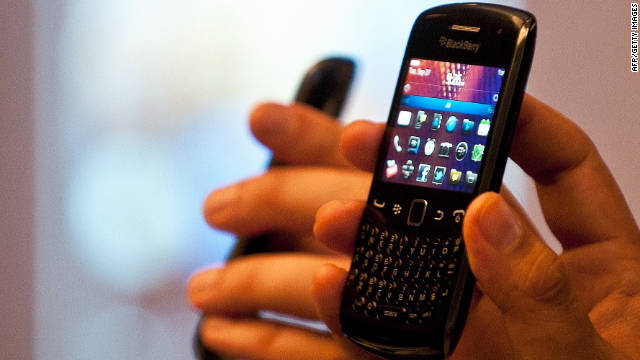
Android OS and iOS will not break down like Blackberry

BlackBerrys around the world could not get messages this week; that wouldn't happen to iPhone or Android, experts say.
(CNN) -- Here's a little secret BlackBerry doesn't want you to know:

It would be technically impossible for all Android phones or iPhones to experience a global four-day outage like the one BlackBerry saw this week, according to mobile communications experts.

Why? The answer is in the technical details of how Research in Motion -- the company that makes BlackBerry smartphones, with their click-clacking keyboards and tie-wearing owners -- handles e-mails and text messages.

Here's the gist: RIM acts as a middleman for all e-mail and BlackBerry text messages. It picks up messages from the wireless carrier and passes them on to the recipient.
BlackBerry says outage restored

Androids and iPhones don't have a middleman for texts and e-mail.

It's this BlackBerry baton-passing system that went down Monday, killing or slowing e-mail and texting services for millions of people in Europe, North America, South America, Asia, the Middle East and Africa. The ordeal lasted four days.

"It's because of the way RIM has set up the (network) architecture that is the downfall when it comes to these types of outages," said Sean Armstrong, who manages wireless communications at a large tech company. "When it's working fine, it's a great system. When it's not working fine, it's a failure."

This week, it's fair to say the system was a big ol' failure. On social media sites, some BlackBerry users said they were so upset about the outage -- the largest in the company's history -- that they were switching to Apple iOS and Google Android devices. And customer satisfaction with BlackBerry already was low.

"Add up every other thing we've ever written about why BlackBerry is dying," wrote the tech blog Gizmodo. "This is worse."

This is not to say that Androids and iPhones never experience network outages.

But they wouldn't be global. And they would be the responsibility of a particular wireless carrier -- AT&T, Sprint, Verizon and T-Mobile -- or a particular messaging system, like Gmail, Hotmail or iMessage, Apple's new in-house messaging service. Not the maker of the phone.

That makes their problems inherently more localized.

"All the stuff goes through them for some form or fashion," Nan Palmero, a writer for the site BlackBerryCool.com, said of the way BlackBerry handles messages and e-mail. That makes it possible, he said, for the global BlackBerry network to crash, which wouldn't be the case for iPhones or Androids.

RIM, however, takes issue with this analysis.

"I would not characterize that as fair," RIM's co-CEO Mike Lazaridis said at a Thursday news conference. "We run a global, secure-push environment that provides the kind of instant messaging that's made BlackBerry so compelling and so valuable."


RIM filters e-mails and BlackBerry messages through its own server farms -- giant warehouses full of computers -- for security reasons, said Armstrong. The company scrambles messages, making them more difficult to intercept.

That's won BlackBerry big fans in the business world.

The system also uses less battery power because RIM handles much of the computation work, Armstrong said.

"The process for checking your e-mail with a BlackBerry is done by the RIM servers," he said. "So RIM is going to handle all the heavy lifting of going to your inbox and looking for new e-mail, and if it finds new e-mail, it's going to push it back your devices."

It also creates the risk of a global crash.

But maybe that's not a completely bad thing.

"For two years, we haven't had a huge issue like this," Armstrong said. "It's just been little bumps along the way. So I don't really see (the middle-man system) as a weakness. I see it as expected, because no system can be faultless."

Rich Miller, who runs the industry blog Data Center Knowledge, said it's clear BlackBerry was unprepared for a failure like the one that began on Monday.

"From what we can see from this outage, it appears RIM doesn't have the infrastructure or the process in place to handle a failure properly when it happens and then to recover from it once it's got a backlog of e-mail in its pipes," he said.

RIM has said this week's outage was caused by a failure at one of its messaging servers in Europe, along with the subsequent failure of its backup system.

Mike Gikas, a senior editor for technology at Consumer Reports, said problems like the one BlackBerry had this week could actually become more common because people are storing more of their data -- from photos to music and documents -- in the cloud, meaning on remote computer servers rather than at home.

"If these services ever get disrupted, that could just mean a lot of unhappy customers," he said. "More and more of our stuff is stored on remote servers, and there's increasing burden on the networks to have them available 24/7."

As the BlackBerry outage shows, he said, not all of them are ready.


Source: http://edition.cnn.com/2011/10/13/tech/mobile/blackberry-servers-android-iphone/index.html?eref=rss_tech&utm_source=feedburner&utm_medium=feed&utm_campaign=Feed%3A+rss%2Fcnn_tech+%28RSS%3A+Technology%29

Read More

Adobe

A look at Adobe's Photoshop Touch for Android app, which will come to iOS later.
(Credit:Adobe Systems)
After dipping its toes in the water with some limited-scope mobile apps, Adobe Systems is taking the plunge today with six programs forAndroid Honeycombtablets, including the company's flagship brand, Photoshop.

The programs, each to debut in November with a $10 introductory price, fall under the new Adobe Touch Apps brand. And they tie in with the new Adobe Creative Cloud, a service for sharing files, finding services, and transferring works from the tablet apps to Adobe'sCreative Suite apps running on traditional computers.
Along with Photoshop Touch, the other apps are Collage, Debut, Ideas, Kuler, and Proto. Adobe earlier had dabbled with a touch interface to computer apps but more recently turned up the heat a bit with its Carousel app for photo editing and sharing.


It's not yet clear where professionals will put the new apps along the spectrum of essential to optional, but it is clear Adobe is showing new competitive fire in the belly after a long period of being criticized for lagging in new-era programming paradigms.

Ideas was already available for iOS, but the five new apps are only available for Honeycomb 3.1, the latest version of Google's Android operating system for tablets. That'll change, though: Of the six-app suite, Adobe's FAQ states, "Look for an announcement from Adobe in early 2012 about Touch App availability for the iPad." At least some of the apps are created with AIR, Adobe's cross-platform mechanism for packaging Flash apps and Web content, so at least theoretically it shouldn't be hard to make them available on other tablets.

John Nack, an Adobe principal product manager in charge of tablet apps, said in a blog post today about Photoshop Touch, "Many Adobe apps (Adobe Carousel, Ideas, Photoshop Express, Eazel, Color Lava, Nav) have already been released on iOS first, and it's good to support customers across platforms. We're busily coding for iOS as well, so I wouldn't make too much of this particular detail."

Here's a look at each of the six apps:

Adobe Photoshop Touch for Android tablets
(Credit:Adobe Systems)

• Photoshop Touch lets people combine images into separate layers, select parts of images with scribbling gestures and refine those selections with fingertip brush strokes, apply filters, paint with various paintbrushes, and share photos on Facebook.

Adobe Collage for Android tablets
(Credit:Adobe Systems)

• Collage lets people combine images, text, drawings, and other content into "moodboards" that can be shared on the Creative Cloud. Graphics can be retrieved from Google and Flickr from within the app. It also accepts screenshots of Web sites, and files can be annotated with various pen or highlighter tools.


Adobe Debut for Android tablets
(Credit:Adobe Systems)

• Debut lets people view files created with Adobe's main Creative Suite design programs--Photoshop for images, InDesign for layout, and Illustrator for vector graphics--that are stored on the Creative Cloud. The idea is to have a vehicle to show work to clients and to be able to add annotations.

Adobe Kuler for Android tablets
(Credit:Adobe Systems)
 
• Kuler, already available online for years, is a tool for picking quintets of colors and sharing them with others. It also lets people extract color themes from photos for a matched palette.


Adobe Proto for Android tablets
(Credit:Adobe Systems)
 
• Proto lets people create interactive mockups of Web sites to be used with mobile devices. The wireframe designs can be opened with DreamWeaver when transferrerd with the Creative Cloud.

Adobe Ideas for Android tablets
(Credit:Adobe Systems)
 
• And Ideas is for drawing vector graphics with fingertip strokes. It supports layers, sharing with Photoshop or Illustrator via the Creative Cloud, and on iOS can be used on a large-screen monitor.
Adobe tangled with Apple over its barring Adobe's Flash Player from iOS devices, but the touch apps are clearly a serious effort to make the jump from PCs to tablets--though at present only one of the six apps, Ideas, runs on iOS.

Another big trend is in advanced Web sites and apps using new Web standards. There, Adobe today announced the acquisition of two start-ups, Nitobi, maker of the PhoneGap mobile Web developer tools, and TypeKit, which offers Web font subscriptions. And it showed off a significant new preview release of Edge.
 
At the same time, it's continuing to work on Flash. Flash 11 will be available at 9 p.m. PT today, along with its close relative, AIR 3, Adobe announced today. The highlight feature, the Stage 3D hardware-accelerated 3D graphics interface code-named Molehill, comes with high-level libraries such as Adobe's 2D Starlight tools and a handful of 3D packages from others to make using the low-level interface easier.

It's clear Adobe, already awakened to its competitive challenges, is now providing something beyond just words to answer its critics.
Read More

Samsung's Galaxy Tab 7.0 Plus Tablet Released!

The new Galaxy Tab 7.0 Plus.
(Credit:Samsung)
 Samsung has made the somewhat surprising decision to unveil yet anothertablet to bolster its line.

Dubbed the Galaxy Tab 7.0 Plus, theAndroid 3.2 (Honeycomb)-based tablet comes with a 7-inch display and 1.2GHz dual-core processor. In addition to 802.11n wireless support, owners will also be able to connect to HSPA+ networks from the device. On the storage side, customers will be able to choose from 16GB and 32GB variants, and a microSD slot offers the ability to add up to 32GB of additional storage to the tablet.

Samsung's decision to announce a new 7-inch Galaxy Tab comes as a bit of a surprise, since the company already has a 7-inch tablet that it launched last year. Earlier this month, the company showed off a 7.7-inch tablet, alongside an 8.9-inch option. Samsung also sells a 10.1-inch tablet. Considering it had nearly all form factors covered, who'd have thought that Samsung would need a fourth option to offer customers?

Samsung's announcement comes just days after Amazon unveiled its own, and highly anticipated, entrant in the tablet market. That device, dubbed the Kindle Fire (complete coverage), lacks many of the bells and whistles found in the Galaxy Tab 7.0 Plus, including connectivity with mobile wireless networks and both front and rear cameras, but makes up for that with a price tag of just $199.

The Kindle Fire, which also runs Android, is slated to launch in November.

As for Samsung's 7.0 Plus, the company says that it will start rolling out the tablet to Indonesia and Austria at the end of October, followed by a gradual launch across Asia, the U.S., Europe, and elsewhere around the world. Pricing was not divulged, and Samsung did not immediately respond to CNET's request for comment on that detail.

When the 7.0 Plus is finally released, there's no telling if it will face the patent troubles Samsung's other tablets have run into. From Australia to Europe, Samsung and Apple are locked in a bitter patent battle that has seen the launch of the Galaxy Tab 10.1 held up in Australia and blocked from sale in Germany. Samsung's smartphones have also come under attack.
Read More

News on Motorola Xoom 2?

Motorola, now with the backing of prospective new owner Google, may have a worthy competitor to theiPad 2 on the way, according to a report. And another, smaller model may be coming too.

Motorola Xoom 2?
(Credit:This Is My Next)
After some rather murky initial Xoom 2 speculation was reported earlier in the week, This Is My Next has come up with some more-solid details.

Those deets include a 9mm thickness (the iPad 2 is 8.8mm) and a 1.2GHz dual-core processor. This time it may be a Texas Instruments ARM chip variant, according to speculation. The Xoom currently sports a 1GHz Nvidia Tegra 2. The ability to record 1080p video is also expected.

Other goodies include Adobe Flash Player 11, Netflix streaming in HD, an optional keyboard case, a stylus pen, and the ability to synch wirelessly to a PC, according to the report.

And that's not all. There may be a smaller 8.2-inch 0.95 pound Media Edition coming too.

Tablets and smartphones pouring out of Motorola Mobility over the next 12 months should be compelling considering that well-heeled Google--the provider of theAndroid software that runs on Motorola's consumer devices--is expected to absorb the company. Perish the thought that this would give Motorola a leg up over rivals in the Android ecosystem!
Read More
Share

Widgets

TRY THESE OTHER INTERNET BROWSERS